

Bring Your Spouse to the U.S.: CR1 and IR1 Spouse Visas
If your spouse currently lives outside the U.S., we can help you complete the consular processing path to bring them home. At Sakhniuk Immigration Law, led by attorney Oksana Specter, we specialize in family-based immigration and have helped thousands of clients worldwide.
We understand the complexities, and we make sure you never feel lost or alone. Unlike large firms, we give your case the attention and care it deserves. If your spouse is already in the U.S., see our page on marriage-based green cards for spouses in the U.S. Not yet married? A K-1 fiance visa allows your fiance(e) to enter the U.S. before the wedding. Our immigration document review helps prevent costly errors in your consular packet. Schedule a consultation today to discuss your spouse's case.
Why Sponsor a Spouse Outside the U.S.?
When U.S. citizens sponsor a spouse abroad, their spouse is classified as an "immediate relative". This status means they do not wait for visa availability, which accelerates the process compared to many other family-based immigration categories.
Processing for spouses abroad typically takes 6 to 9 months or more, especially if documentation is incomplete or an error occurs. That is why error-free filing, proper evidence, and expert review are essential.
Common Pitfalls and Avoiding Misrepresentation
Some couples try to "shortcut" processing by having the spouse come on a tourist visa and adjusting status from within the U.S. That can lead to serious issues:
- At consular or CBP, statements suggesting the spouse intended to stay may be viewed as misrepresentation.
- USCIS may deny or bar adjustment due to fraud or misuse of nonimmigrant intent.
- Your case is safer when the spouse follows the proper consular path, not ambiguous entry methods.
Top Questions We Help You Answer
- How to bring your spouse to the U.S. if they live abroad?
- What is the consular process timeline and how long will it take?
- What's the difference between CR1 vs IR1 visas?
- What documents do you need for a spouse green card?
- How to avoid misrepresentation that can delay or deny your case?
- When and how to remove conditions or apply for U.S. citizenship?
The typical consular processing timeline can vary in processing time, but can take longer if documentation is incomplete or an error occurs. Below is a detailed breakdown of the average process:
The Process of Bringing Your Spouse to The U.S.
In order to bring your spouse to the U.S., you and your spouse will need to go through the following steps:
-
Filing Petition for Alien Relative with USCIS
The process of bringing your spouse to the U.S. starts from filing Petition for Alien Relative with USCIS by the U.S. citizen. The purpose of this form is to establish the legitimacy of the family relationship. The mere existence of a marriage certificate will not be enough to establish a bona fide marital relationship. You will be required to submit comprehensive package emphasizing the legitimacy of your family relationship that includes signed affidavits from friends, love letters, joint bank account, joint lease or mortgage and so on.
-
National Visa Center Processing
After USCIS approves the petition, it is sent to the National Visa Center (NVC). Once received, the NVC will assign a case number for the petition and instruct the applicant to complete Form DS-261, Choice of Address and Agent. The NVC will begin pre-processing the applicant's case by providing the applicant and petitioner with instructions to submit the appropriate fees. After the appropriate fees are paid, the NVC will request that the applicant submit the necessary immigrant visa documents, including the Affidavit of Support, application forms, civil documents, and more.
-
Visa interview at the U.S. Consulate or Embassy
- Once the NVC determines the file is complete with all the required documents, they will schedule an interview appointment. NVC then sends the file, containing immigration petition and supporting documents, to the U.S. Embassy or Consulate where the spouse will be interviewed for a visa.
- During the interview, immigration officer will review visa application again to ensure that spouse is admissible to the U.S. If the visa application is approved, spouse will receive immigrant visa that can be used to come to the U.S. as a permanent resident.
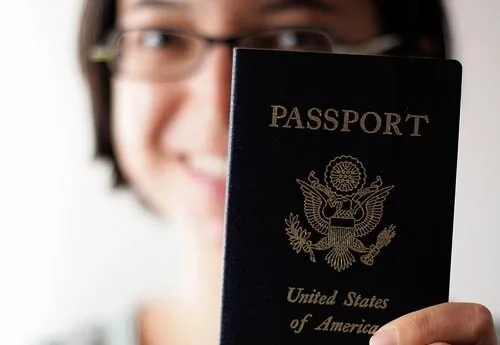
- If you are issued an immigrant visa, the consular officer will give you your passport containing the immigrant visa and a sealed packet containing the documents you provided before. It is important that you do not open the sealed packet. Only the U.S. immigration official should open this packet when you enter the United States.
- You are required to enter the United States within 6 months after being issued an immigrant visa.
-
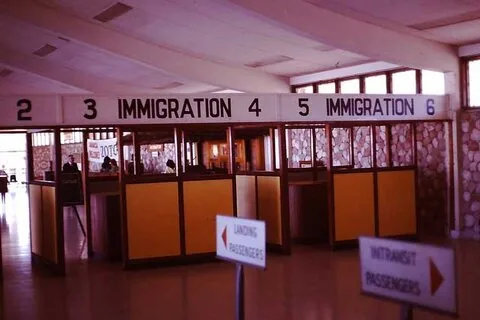
At the Port of Entry
At the port of entry the U.S. Customs and Border Protection officer will stamp your spouse's passport with temporary Form I-551 (green card) evidencing lawful permanent resident status. Your actual green card will be mailed to you later at the mailing address that you provided to NVC.

-
Removing Condition On Your Green Card
If you have been married less than 2 years when your spouse was granted permanent resident status, your spouse will receive two year conditional green card. In order to remove the condition on the spouse's green card, both spouses need to jointly petition to remove the condition within 90 days before the expiration date on the conditional resident card. If you fail to file during this time, your spouse's resident status will be terminated and he or she may be subject to removal from the United States. If the couple has been married for more than 2 years prior to adjustment of status, the foreign national will receive a green card without conditions valid for 10 years.
-
Applying for Citizenship
As the spouse of the U.S. citizen, you can apply for citizenship in 3 years of continuous residence in the U.S. as a green card holder. You will also need to meet other requirements, such as:
- Be at least 18 years old
- Remain married to their U.S. citizen spouse
- Have been married and living with the same U.S. citizen spouse for the past three years, and
- The U.S. citizen spouse must have been a U.S. citizen for the past three years
If any of the above conditions are not met, then the permanent resident spouse will be eligible to apply for U.S. citizenship through naturalization following 5 years as a permanent resident.
Processing time and fees
USCIS filing fee: Form I-130: $675 paper, $625 online. Fees are subject to change. Checked on October 23, 2026 against the official USCIS fee schedule (Form G-1055, edition 10/16/26); confirm the current amount on the USCIS fee page before filing.
Cost and timing are usually the first questions couples ask, and the honest answer is that neither is fixed, so it helps to know what to look at and why they move. A consular spousal case has several separate stages: the I-130 petition at USCIS, case creation and document review at the National Visa Center, the medical examination, and the immigrant visa interview at a U.S. embassy or consulate. Each stage has its own fee and its own wait. USCIS publishes filing fees on its fee schedule and processing times on its processing-times page; the State Department publishes the immigrant visa application and related fees on its immigrant visa pages. Fees are reviewed and can change, so use the official figure that is current on the day you file, and keep a copy. Timelines depend on the service center or consulate handling your case, how complete the documents are, security checks, and whether USCIS or the consulate asks for more evidence. A frequent cause of delay is something avoidable: a missing civil document, a name that appears differently on two records, or an Affidavit of Support that does not match the sponsor's tax filings. Plan for medical exam costs and document translation too. An attorney reviewing your file would check that the petition is complete before you pay, make sure the evidence of your relationship tells a consistent story, and tell you which consulate is likely to process your case. If anything in your history could slow things down, it is far better to learn that at the start.
What We Do For You — Step by Step
- Initial Case Evaluation
Attorney-led assessment of eligibility, inadmissibility risks, and the fastest consular processing path for your spouse. - Personalized Roadmap & Timeline
A clear plan, steps, timeline, required documents, and fees, so you always know what to expect. - Bona Fide Marriage Evidence Planning
Custom checklist of photos, financial records, affidavits, communications, and joint documents to prove a genuine marriage. - Form I-130 & NVC Coordination
We prepare and file your I-130, then guide you step-by-step through the National Visa Center process. - DS-260 & Consular Packet Preparation
We verify DS-260 accuracy, compile civil documents, and ensure your consular packet is complete before submission. - Document Review & Quality Control
Line-by-line attorney review of all forms and evidence to eliminate errors and omissions that cause RFEs or delays.
- Interview Preparation & Coaching
We coach your spouse on likely consular questions, review documents, and help them present confidently at the embassy. - Proactive RFE Prevention & Response
We build filings to minimize RFEs. If one arrives, we respond quickly with legal analysis and supplemental evidence. - CR1 vs. IR1 Visa Guidance
We advise on whether your spouse qualifies for a conditional (CR1) or full 10-year (IR1) green card based on marriage duration. - Advocacy on Complex Issues
Prior overstays, misrepresentation risks, or inadmissibility concerns? We advise on waivers and alternative legal paths. - Removal of Conditions & Long-Term Planning
We prepare I-751 petitions and advise on the path toward U.S. citizenship when eligibility arises. - Continuous Communication
Timely updates, direct access to our team, and a dedicated contact so you always know where your case stands.